
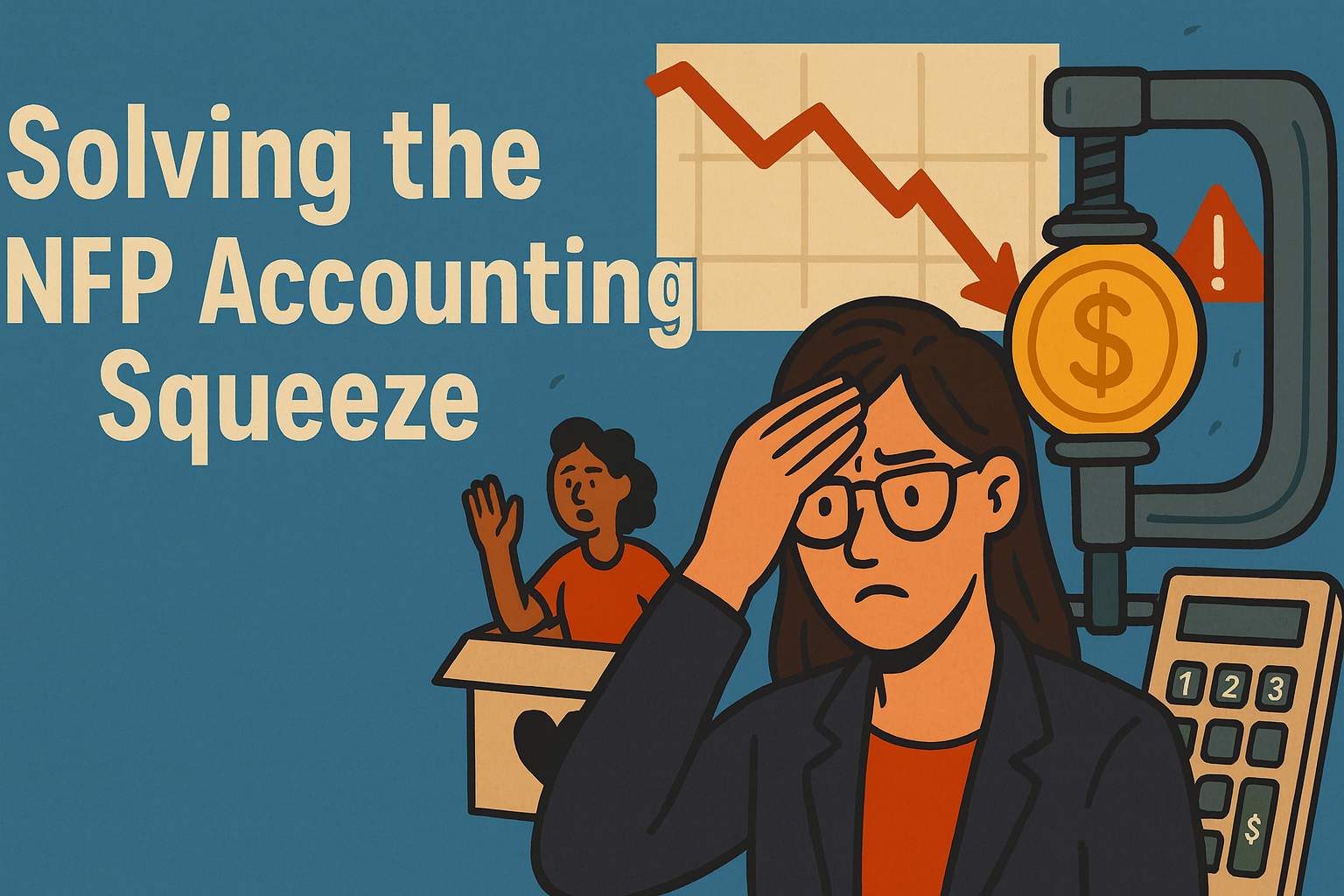
You just got off the call with one of your largest donors and they want you to execute against a new priority but want you to find a way to “self-fund” it by deprioritizing something else. Also, since they want dues flat year-over-year, to give the team cost-of-living adjustments you’re going to have to find new revenue or yet again, cut funding for one of your programs. Does this sound familiar?
As a finance leader in a not-for-profit organization, you live with a core tension every single day: the demand to do more with less. Your board and donors require deeper insights, timelier reporting, and flawless compliance. Meanwhile, budgets are shrinking, and your staff is stretched to the breaking point. It’s a classic challenge, but in today’s economic climate, it feels less like a puzzle and more like a pressure cooker.
The answer isn’t just to work harder; it’s to work smarter. Savvy NFP leaders are finding that the key to thriving isn’t just in optimizing existing processes, but in fundamentally rethinking the structure of their accounting departments. In this post, we’ll explore the key pressures you face and offer a modern, strategic path forward.
The New Mandate: Drastic Cost Optimization
The Challenge: Sustained inflation and unpredictable funding streams are no longer temporary concerns; they are the new reality. Every dollar of donor funding has to stretch further, and every line item in your budget is under scrutiny. In the search for savings, the finance department — often viewed as a cost center — is under immense pressure to reduce its overhead. This leaves leaders facing a difficult choice: cut costs and risk compliance, or maintain quality and fall short of budget goals.
The Opportunity: This pressure doesn’t have to be a threat. Instead, view it as a mandate for innovation. Imagine if you could fundamentally restructure your back-office costs, reducing them significantly without sacrificing an ounce of quality or control. True cost optimization allows you to reallocate precious budget from administrative overhead directly to your mission-critical programs. It’s a powerful way to demonstrate fiscal responsibility and maximize your impact, turning a budget cut into a strategic win for your cause.
Actionable Tip: Conduct a detailed cost-benefit analysis of your transactional accounting roles (AP, AR, bookkeeping, bank reconciliations). Calculate the fully-loaded cost of an in-house employee—including salary, benefits, payroll taxes, recruiting costs, and overhead. Compare that figure to the potential savings from a global team model. The numbers often tell a compelling story.
The Capacity Crisis: When Good-Enough Reporting Isn’t Enough
The Challenge: What does your day-to-day really look like? For many NFP controllers and CFOs, it’s a blur of tactical tasks. You’re buried in reviewing transactions, managing payables, and chasing down documentation. The month-end close is a frantic rush, leaving no time or energy for the work you were actually hired to do: performing deep financial analysis, forecasting, and providing strategic counsel. This is the capacity crisis, and it keeps your organization’s most valuable financial minds stuck in the weeds.
The Opportunity: Liberate your senior leaders from these tactical tasks. By delegating the foundational bookkeeping and transactional work to a dedicated, efficient, and cost-effective team, you can ensure the books are consistently accurate and up-to-date. This frees you and your senior staff to finally focus on high-value strategic work. You can analyze program profitability, build compelling financial narratives for grant applications, and serve as a true strategic partner to your executive director and board. The opportunity is to reclaim your most valuable asset: your time.
Actionable Tip: For one week, implement a clear division of labor in your mind. Keep a running list of every task that is purely transactional. You’ll likely find that a huge portion of your time is spent on work that doesn’t require high-level strategic oversight. Defining these tasks is the first step toward delegating them effectively and solving your capacity crunch. More and more NFP finance organizations are adopting global team models as a way to expand capacity in a fiscally responsible way.
The Persistent Talent Gap
The Challenge: The domestic hiring market for skilled accounting professionals is incredibly tight. Finding qualified staff accountants and bookkeepers who understand the nuances of nonprofit finance is both difficult and expensive. When you do find someone, competing with for-profit salaries is a major hurdle. This leads to high turnover on already lean teams, resulting in knowledge loss, operational inconsistency, and burnout among your remaining staff.
The Opportunity: The solution to your hiring problem may not be in your zip code. By looking beyond local constraints, you can access a global talent pool of vetted, experienced, and tech-savvy accounting professionals. These individuals are proficient in NFP fund accounting, 990 reporting, and the cloud-based accounting platforms you already use. This approach elegantly solves the dual challenges of talent availability and affordability, providing the stable, long-term capacity your team desperately needs.
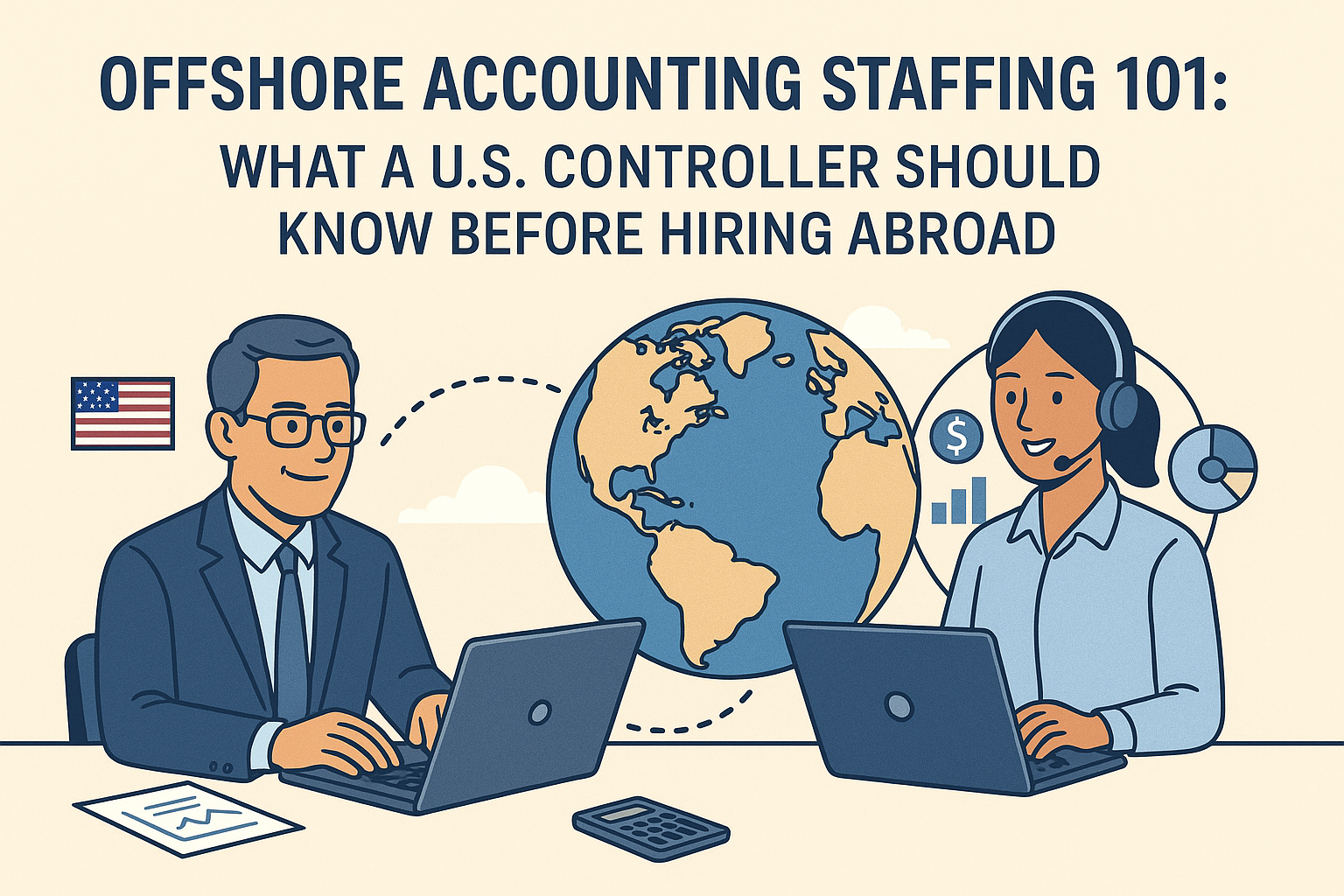
Actionable Tip: Re-evaluate the traditional “all-in-house” team structure. Instead of searching for one local “do-it-all” hire, consider building a blended team. In this model, a dedicated offshore accounting staff member handles your core processes with precision, seamlessly supporting and reporting to your onshore leadership. As a bonus, working across multiple time zones unlocks those hours when your onshore team is off-the-clock. There are few better feelings than waking up to a finished work product that you had assigned right before logging off.
The Modern Accounting Department: Building a Global, Blended Team
Facing these challenges in isolation is daunting. But when you see them as interconnected, a single, powerful solution emerges: rethinking your operational model. This is where building a global, blended team comes in.
This isn’t about sending tasks to a faceless call center. It’s about building a dedicated extension of your department. When you engage with a service like Cayto Group for offshore accounting staff placement, you are matched with named professionals who become integrated members of your team. They work within your systems, follow your processes, and report directly to your leadership.
It is a true strategic partnership. You get the specialized skills and capacity you need to run a flawless back office, all at a sustainable and predictable cost. You eliminate the immense headaches of domestic recruiting, hiring, and retention, allowing you to focus on leading your department and guiding your organization.
Conclusion
To ensure financial resilience and long-term sustainability, nonprofit organizations must embrace modern, efficient operational models for their finance function. The pressures of cost, capacity, and talent aren’t going away. By strategically building a blended team, you can take decisive control of all three, transforming your accounting department from a strained cost center into a powerful engine for your mission.
Are you ready to stop struggling with the accounting capacity crisis? Contact Cayto Group for a consultation to learn how a dedicated offshore team can transform your finance function and free you to focus on your mission.